Polartec® Alpha® Direct is one of those materials that’s all too easy to fall in love with. It’s incredibly lightweight, highly breathable, dries quickly, and keeps you warm or wicks away excess heat. But there’s a catch.
The same design that makes Alpha® Direct work so well also comes with certain limitations you should be aware of. At Tilak, we’ve been using this material as a lining since the 2018/2019 season. Today, we also use Alpha® Direct to make entire outer layers: the Sarek, the Murun, and, most recently, the Seima. In this article, we’ll explore why we’ve fallen in love with this material, where its true limits lie, and, most importantly, when to choose it. We’ll also walk you through each model and show you the types of movement and uses for which Alpha® Direct makes the most sense.
For many years, there was only one Polartec fabric for us: Power Stretch®, which you may recognize from the Serak sweatshirts and pants, the Femund jacket, or even our winter hats. It has been a staple in our catalog since the 2005/2006 season.
It’s pointless to try to list all the places we (you) have taken it over the past 20 years. Probably everywhere. Sometimes we wore a thinner base layer underneath it, but in the bitter cold, we didn’t hesitate to put it on twice. It proved to be an absolutely versatile piece of gear, and we’d toss both the Femund and the Serak into our backpacks without a second thought, no matter where we were headed. And we had everything we needed to be happy.
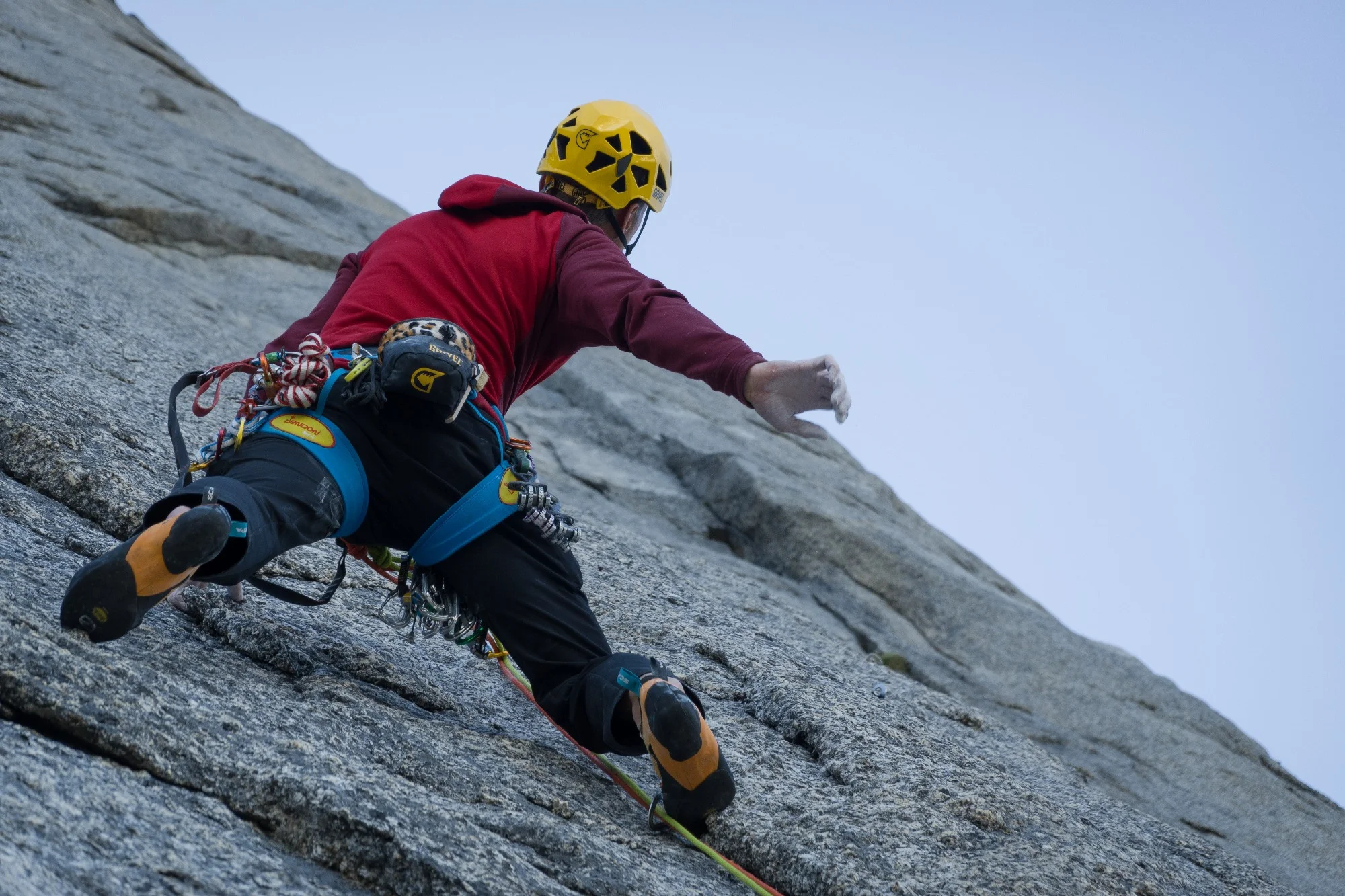
Moby Dick 7c+ 1100m, Ulamertorsuaq wall, Greenland, Smolo climbs wearing a red Femund, Danny took the picture
However, in 2012, Polartec developed the Polartec® Alpha® insulation material for the U.S. Special Forces. Incidentally, the U.S. Department of Defense seems to be a good source of funding for innovative projects—we have it to thank for GPS and the Internet, for example.
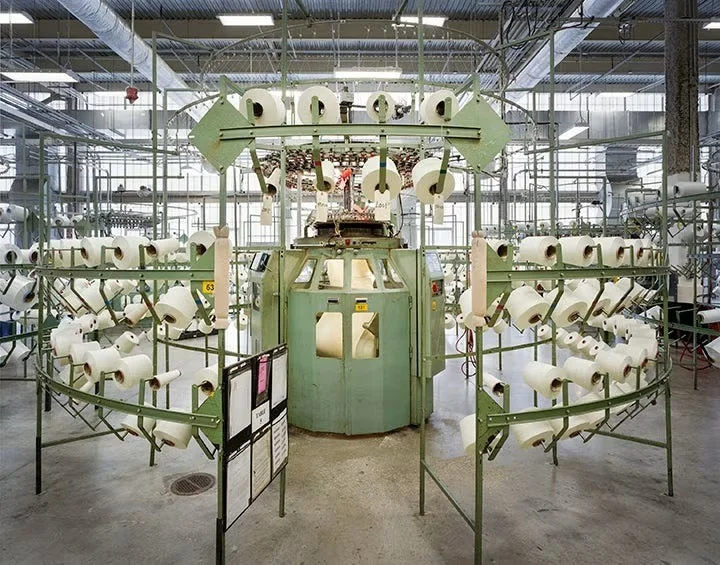
A circular knitting machine at the Polartec plant (photo: Christopher Payne)
The goal of developing the new material was to solve the problem of soldiers—who were stationed in the Afghan mountains at the time—overheating during intense physical exertion and then freezing when they suddenly rested. The military required insulation that would be highly breathable, quick-drying, and warm even when wet, which eliminated the need to constantly put on and take off layers. Although the first Alpha required an outer shell and a lining, it dramatically increased comfort on duty.
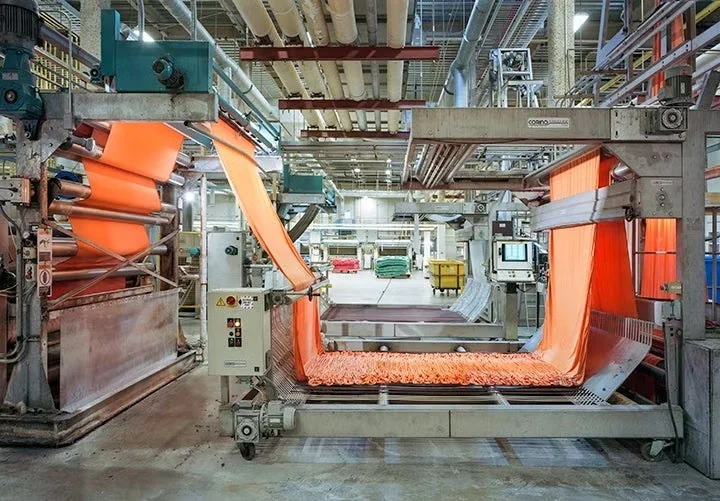
fleece drying machine, Polartec (photo: Christopher Payne)
But development continued, and in 2017, Polartec® Alpha® Direct was introduced. This initially unassuming material has sparked a small revolution over the past few years—and not just in the garage workshops of trail enthusiasts.
So what actually happened? Unlike its predecessor, Direct no longer requires an outer layer or lining, so the fibers can rest directly on the skin or the base layer.
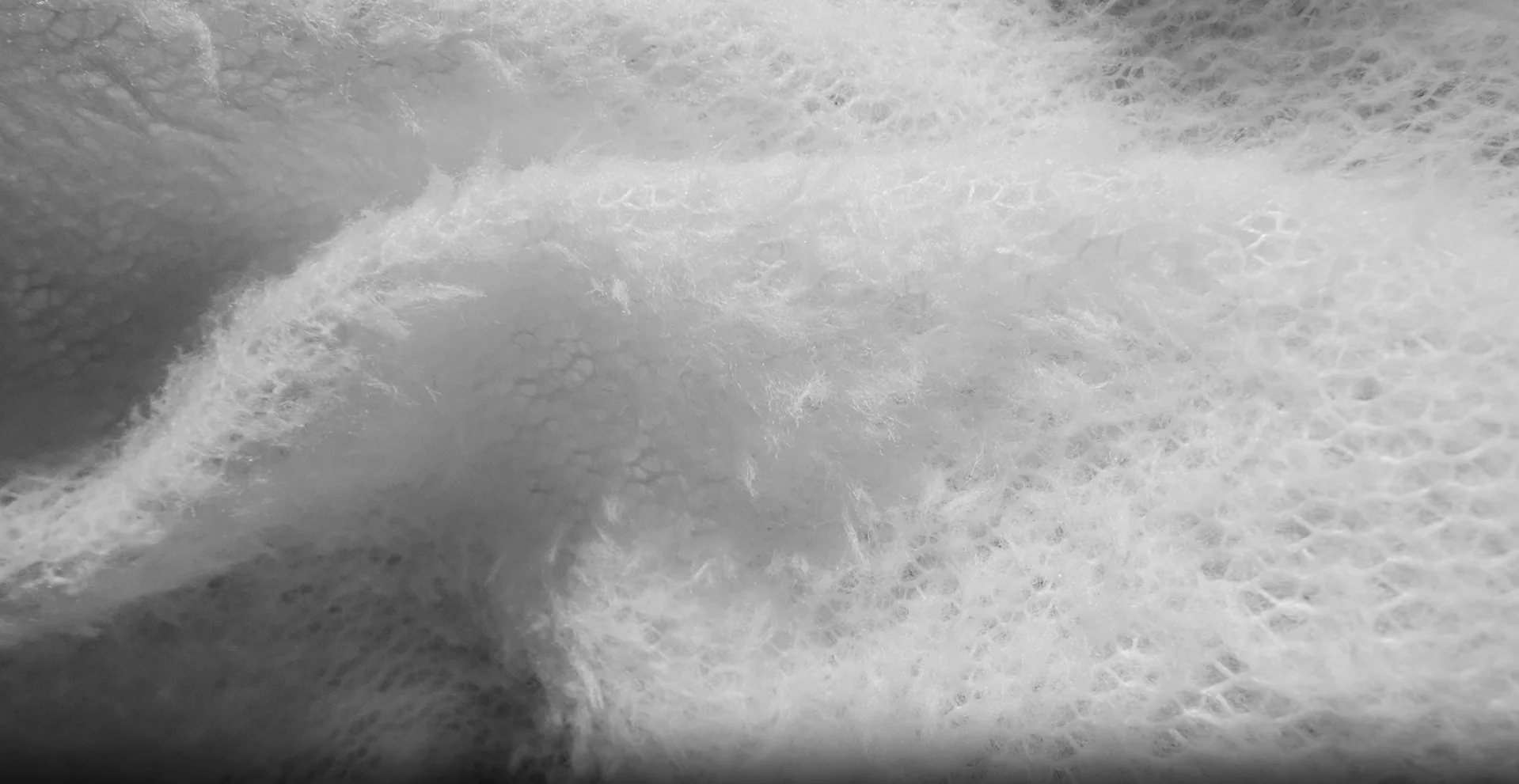
In terms of design, it is essentially a mesh core made of Alpha® corrugated fibers
As a result, it is significantly more breathable, dries quickly, and wicks away moisture. It also offers an unparalleled ratio of weight to insulation. That’s one of the reasons it quickly became a favorite among ultralight enthusiasts.
We’ve been using Polartec® Alpha® Direct since the 2018/2019 season as insulation in our Spike, Nebba, and Verso jackets. But last winter, for the first time, we made jackets using Alpha alone—the new Sarek and Murun models—and we absolutely fell in love with them. So now, Polartec isn’t just one option for us anymore, and when we’re packing our backpacks, we have to take a moment to decide which one to take.
So why do we mention a problem in the headline?
Because even though we don’t hold back on superlatives when it comes to Alpha® Direct, there’s one catch. That’s the material’s mechanical durability. While we’ve been using Power Stretch® gear for years—under our backpacks, for climbing, basically treating it pretty rough—it can still hold up to a lot. Alpha’s exceptional properties come at the cost of significantly lower durability. It doesn’t like rough handling, backpack straps, Velcro, or rubbing against anything. It’s more of a specialist for active movement, where it wicks away heat fantastically. However, it’s not something you’d wear under a backpack and use for everything. Or rather, you can, but you have to expect it to show wear and tear accordingly. You probably won’t tear the garment, but it will show signs of wear depending on the strain you put it through.
It's not a flaw in the material, but rather its very nature—and it's only fair that you know this before you buy one model or the other.
Now let's take a look at what we've sewn from the Alpha® Direct
It’s really not rocket science—the resulting garments are simple because the fabric takes center stage. You’re already familiar with last year’s Sarek and Murun models. This year, we’re adding the new Seima model, which we’ve just sewn.
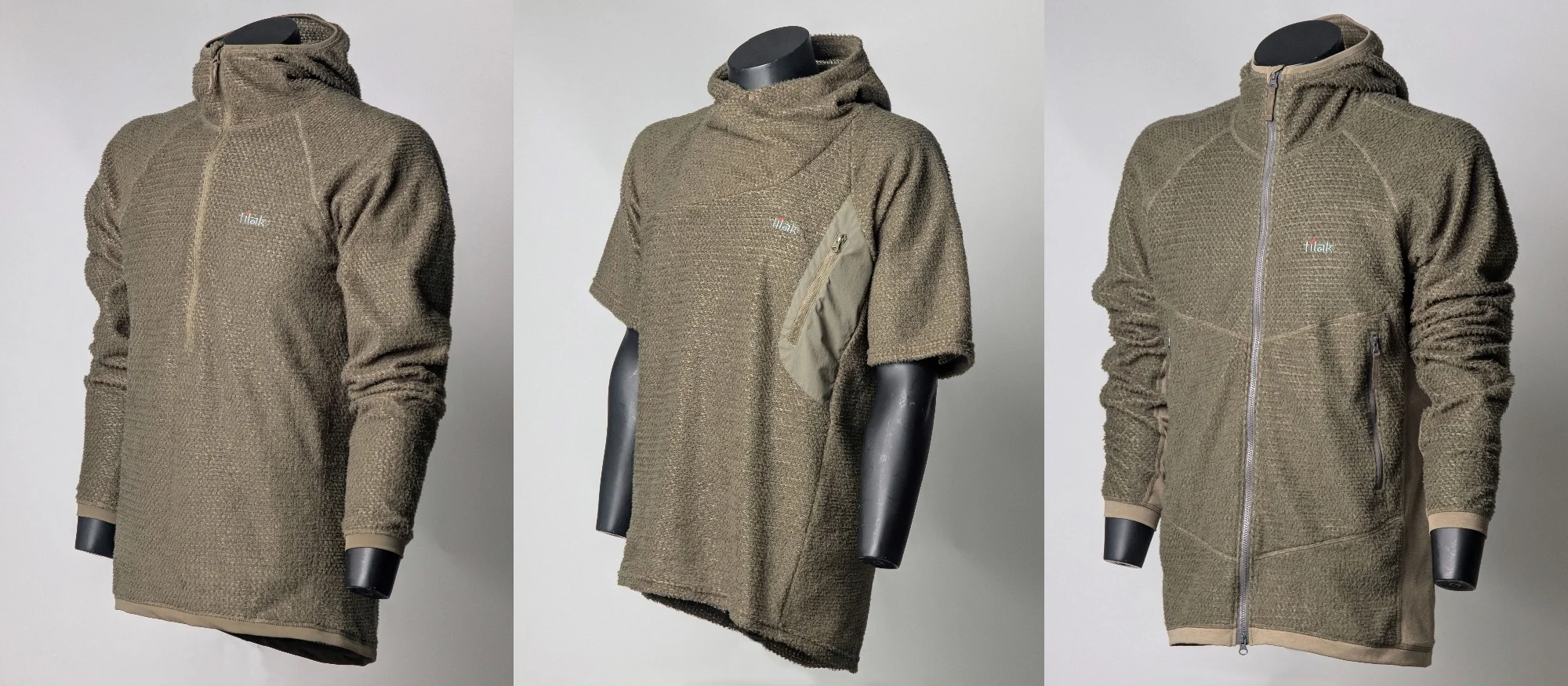
Seima, Murun, Sarek, all made of Polartec® Alpha® Direct 90 g/m2
Murun
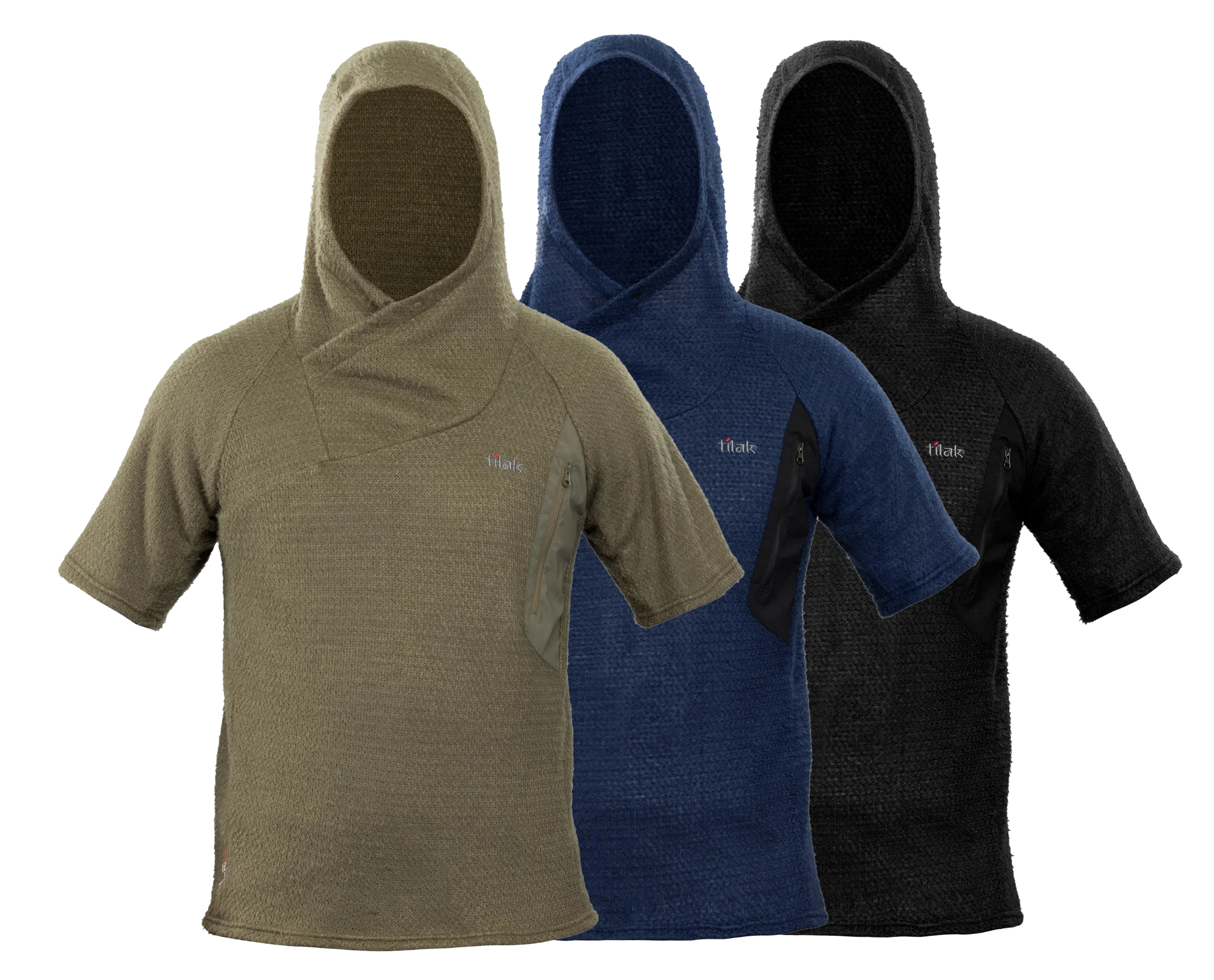
The lightest and simplest midlayer in the entire collection, weighing 116 grams in size M. It features a single chest pocket in a polyamide panel, a hood, and an eye-catching asymmetrical collar with a fastener. Since it’s the only short-sleeved piece in the collection, it’s perfect for truly active movement. We’ve tested it over an Ultralite LS T-shirt—a fantastic combination for winter trail running.
Sarek
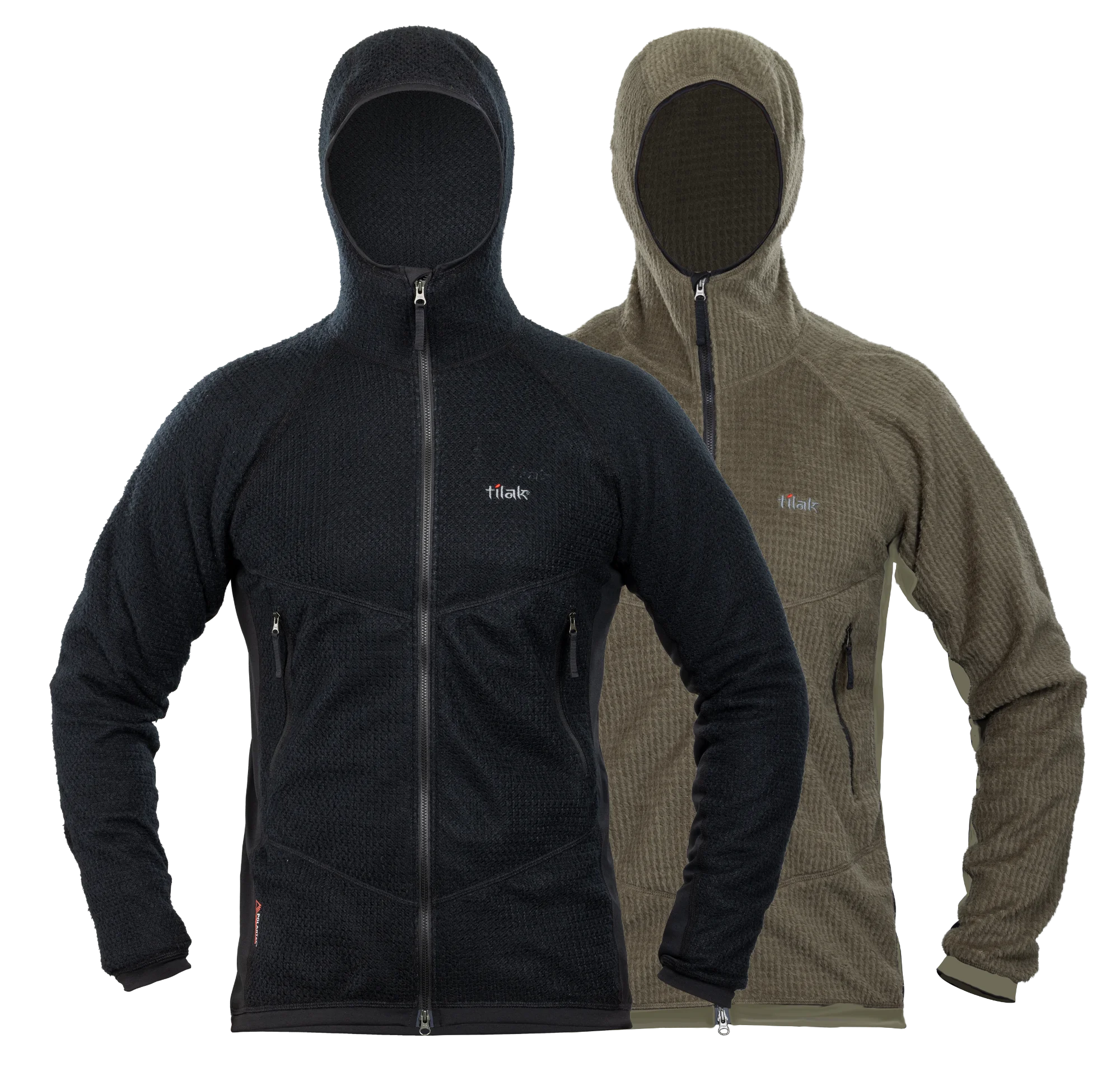
We’ve redesigned the Sarek jacket a bit since last year. The most significant changes are the Alpha® Direct 90 g/m² insulation and the added hood. What you probably won’t notice is the lack of a waist drawcord—we found it wasn’t necessary. What you’re sure to notice, though, are the muted colors. What remains the same, however, is that it’s the most versatile model of the Alpha trio. The full-length two-way zipper makes it easy to put on and allows you to wear a harness under the jacket. The anatomical hood fits well under a helmet, and elastic panels made of lightweight polyamide on the sides improve the fit and mechanical durability. Thanks to two spacious pockets, the Sarek is particularly useful as an outer layer. The new jackets in black and kalamata will be ready in mid-October.
Seima
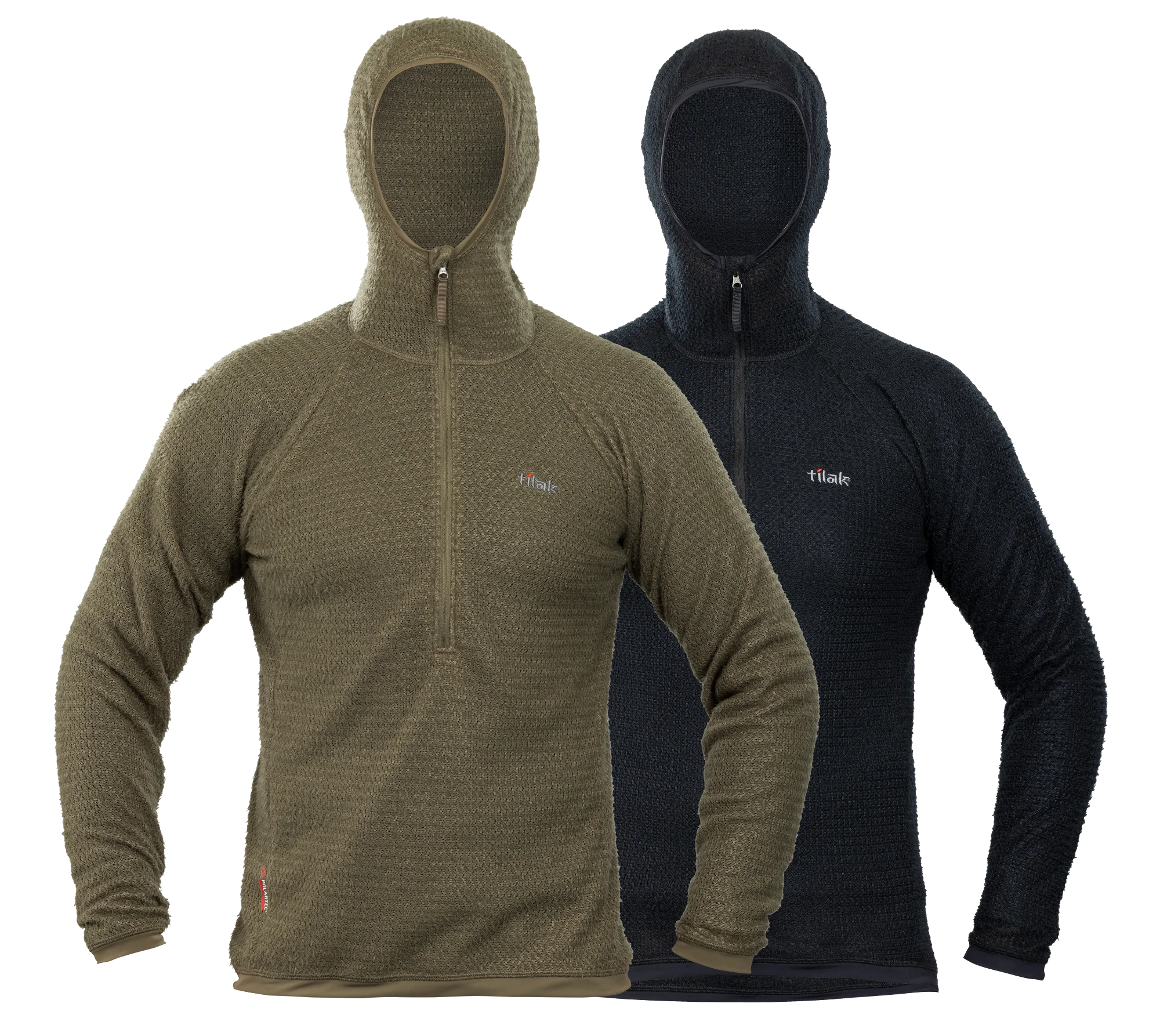
New to the collection—the Seima sweatshirt literally exudes minimalism. The goal of its design was to offer a simple, functional long-sleeved layer that keeps the weight as low as possible. The result is 147 grams in size M. The half-zip makes it easy to put on, and the same anatomical hood as on the Sarek fits comfortably under a helmet.
The choice is easy
If I want short sleeves, I’ll go with Murun. If I want long sleeves and pockets, and weight isn’t my top priority, Sarek is the one for me. If I want long sleeves and the lightest weight possible, Seima is the obvious choice. Whether you’re an experienced Alphist or this is your first time trying this material, we hope you’ll love it as much as we do!


